Nokalakevi
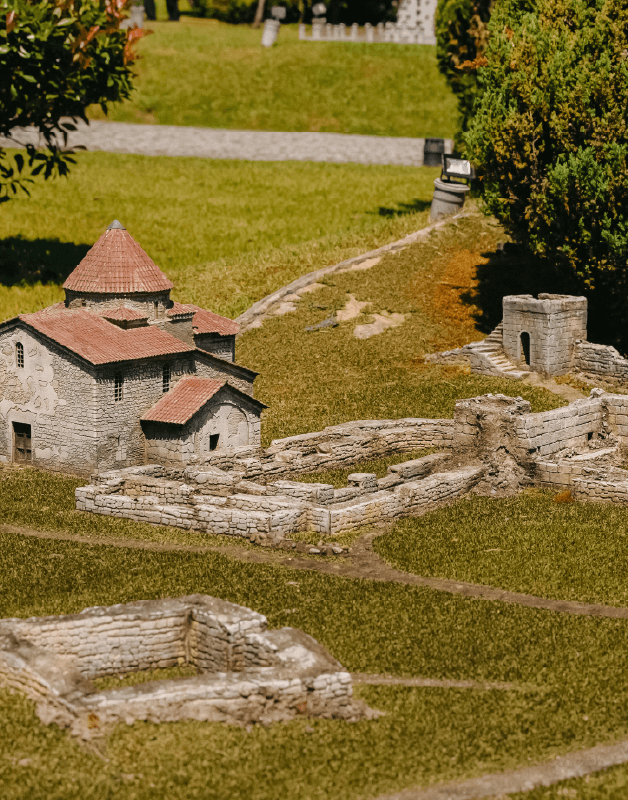
Nokalakevi, also known as Tsikhegoji or Archaeopolis, is located in the Senaki Municipality of Samegrelo. It is a multi-layered archaeological monument, with its oldest layer dating back to the 8th - 7th centuries BC, although traces of human settlement on this site begin as early as the beginning of the 1st millennium BC. Nokalakevi was one of the most important cities in ancient Georgia.
Roman and Byzantine historians refer to the city as Archaeopolis, while earlier Georgian chronicles call it Tsikhegoji ("Kuji's Fortress"). According to the Georgian historian Leonti Mroveli, in the 3rd century BC, King Pharnavaz of Kartli granted Kuji the governorship of Egrisi and Svaneti, and Kuji built the fortress of Tsikhegoji here.
From the 4th to the 8th centuries AD, Tsikhegoji served as the capital of the Kingdom of Egrisi. It was also the site of the Battle of Archaeopolis. The Persians attacked Tsikhegoji three times and succeeded in capturing it only on their third attempt; however, the city was soon reclaimed by the Byzantine-Laz forces.
In 737–738 AD, the city was destroyed by Marwan the Deaf. After this, Tsikhegoji declined and became a small village. The settlement regained importance in the 16th century, when the Prince of Samegrelo built a palace here. During the 16th–18th centuries, it served as the residence of the Dadiani rulers of Odishi.
Did you know that...
1. The city covered an area of 19 hectares and was surrounded by a 3-kilometre-long defensive wall. It consisted of three sections: the Lower Town, the Middle Fortress, and the Citadel.
2. Archaeologists have uncovered palaces, Christian churches, bathhouses, a reservoir, a tunnel and numerous other domestic and defensive structures within the ancient settlement.
3. On the southern and western sides, where the city borders the river and steep cliffs, it is protected by only one wall. On the eastern side, which was more accessible to enemies, three parallel defensive walls were constructed. Important archaeological discoveries have been made both in Nokalakevi and its surrounding area.
4. Archaeological excavations at Nokalakevi began in 1930 - 1931 on the initiative of the Georgian historian Ivane Javakhishvili.
5. A cemetery dating to the 4th - 3rd centuries BC has also been excavated at Nokalakevi. The deceased were buried in qvevri burials, traditionally with a Colchian Tetri coin placed in their mouths. Alongside locally produced and imported pottery, archaeologists discovered bronze bracelets, beads, coins, and other artefacts. One of the graves contained rare artistic objects, including a Hellenistic kantharos, black-glazed ceramic vessels, and other valuable finds.